
Start with the glass faces being cleaned
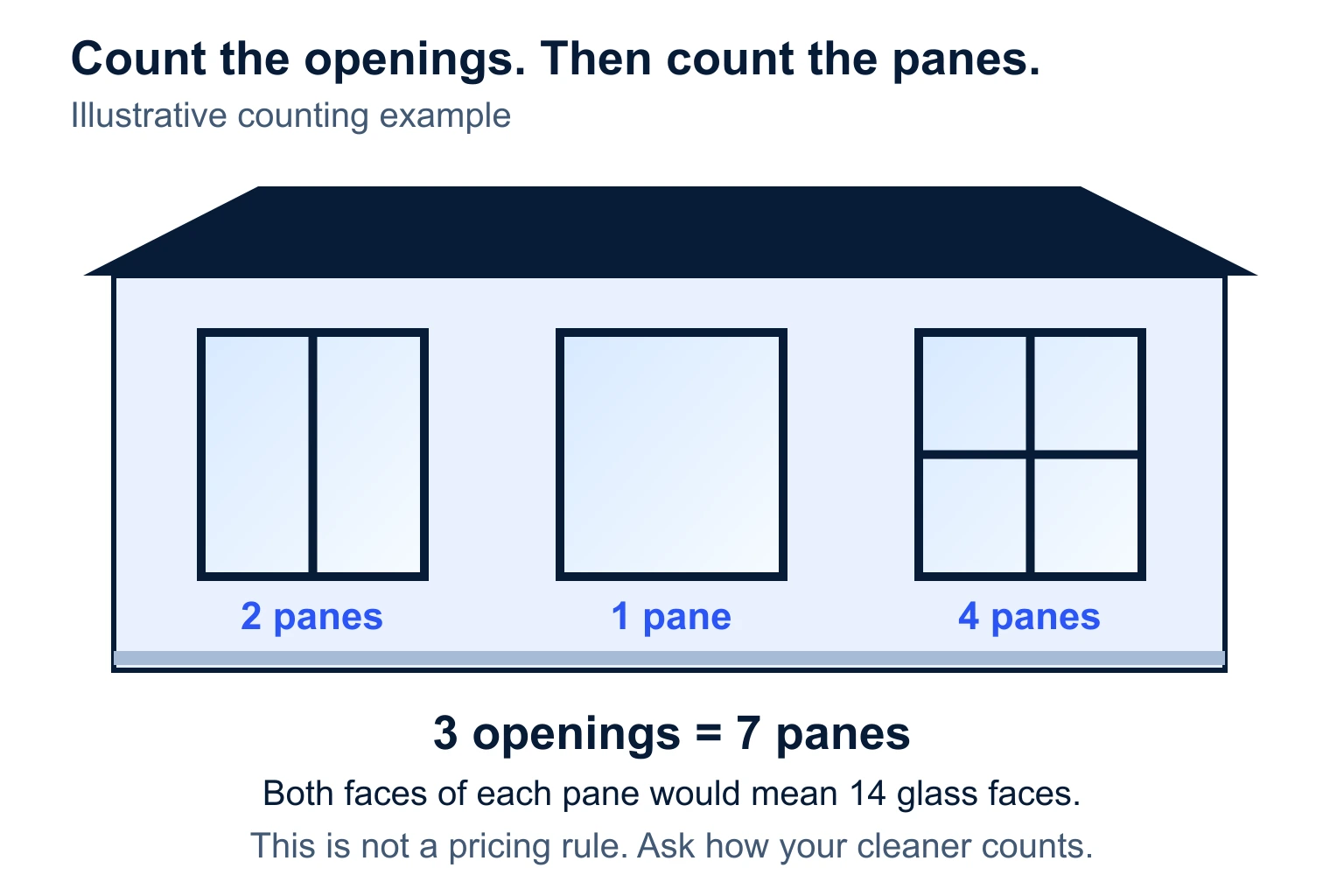
The diagram’s three openings contain seven panes: two, one and four. Selecting both accessible sides would mean fourteen glass faces rather than seven exterior faces. This is an illustration, not a billing rule. It shows why an opening count alone leaves part of the work undefined. Add doors, sidelights and skylights to the description instead of assuming they disappear into the room count. The selected sides matter even when the building and number of openings stay exactly the same.
Divided glass creates more individual pieces of work
A large uninterrupted pane and an opening divided into several small panes have different layouts. Each divided section has its own edges and working space. Show actual divisions in a photograph rather than describing every opening as a standard window. The current Texas Window Washing residential page says French panes are priced per individual pane. That is a company-described counting practice, not a universal market rate. It is a reason to identify the glass arrangement before trying to infer the work from the size of the house.
Track detailing is a different task from washing the pane
Look below and in front of the glass. A screen that needs removal and washing adds a separate handling task. A sill with loose dust and a sliding track with accumulated grit describe different levels of detail. Ask for the level you actually want: glass only, selected screen care, or closer attention to tracks and sills. Do not assume the word cleaning specifies the same result for each surface. The company’s residential page presents these as selectable work. A glass-only visit can be complete for its purpose while leaving unselected track detail untouched.
Access changes the preparation and setup
Consider the route to the pane, not simply its height. A clear ground-level elevation differs from glass above a planted border, a narrow side path, or interior furniture. A detached guest space adds another location to reach and prepare. Wide photos help show those conditions; a close-up of the pane does not. Tell the estimator about gates, parking or carrying restrictions, rooms that must be released, and obstacles below high glass. The contractor can then identify a suitable approach within its equipment capability. Do not assume that one easily reached side of the home represents every elevation.
Condition can change washing into an assessment
Ordinary dust and fingerprints are different from sprinkler deposits, paint, mortar or adhesive. SAWS reports typical hardness of 15–20 grains per gallon for its supplied water, but that does not diagnose a particular mark or describe every nearby water source. Persistent deposits may need a separate assessment; damaged glass may not be corrected by cleaning. NGA/IWCA guidance calls for attention to glass type, exposed coatings and manufacturer instructions. The extra decision is whether a suitable treatment can be proposed at all, not simply how many more panes should be washed. Keep uncertain residue identifiable rather than treating it as routine dirt.
One pane count, two very different visits
Consider the same illustrative three openings and seven panes in two settings. In the first, exterior access is clear, the owner selects only outside glass, and the concern is ordinary soil. In the second, the owner requests both sides, screen washing and patio-track detail; furniture limits an interior approach, and one pane has an unknown deposit. No price or outcome is implied. The second description contains more selected surfaces, preparation and an unresolved condition despite the identical opening count. A simple per-opening guess would hide the choices that created the difference. The useful question is which of those tasks you want and which can be assessed safely.
Choose priorities by the result you care about
If you want a focused visit, name the view or detail that matters: both sides of the main patio doors, exterior glass across the home, or tracks in the rooms you use most. Choose the actual surfaces rather than an undefined basic package. Leave required access arrangements intact and ask about any uncertain condition before adding treatment. Once the work itself is clear, use the separate price-comparison worksheet to evaluate written offers for that purchase.
Sources and further reading
Ready to compare written prices for that work?
Use one worksheet to separate a matched glass scope, optional detail and conditions still awaiting assessment.
Use the matched-quote worksheet