
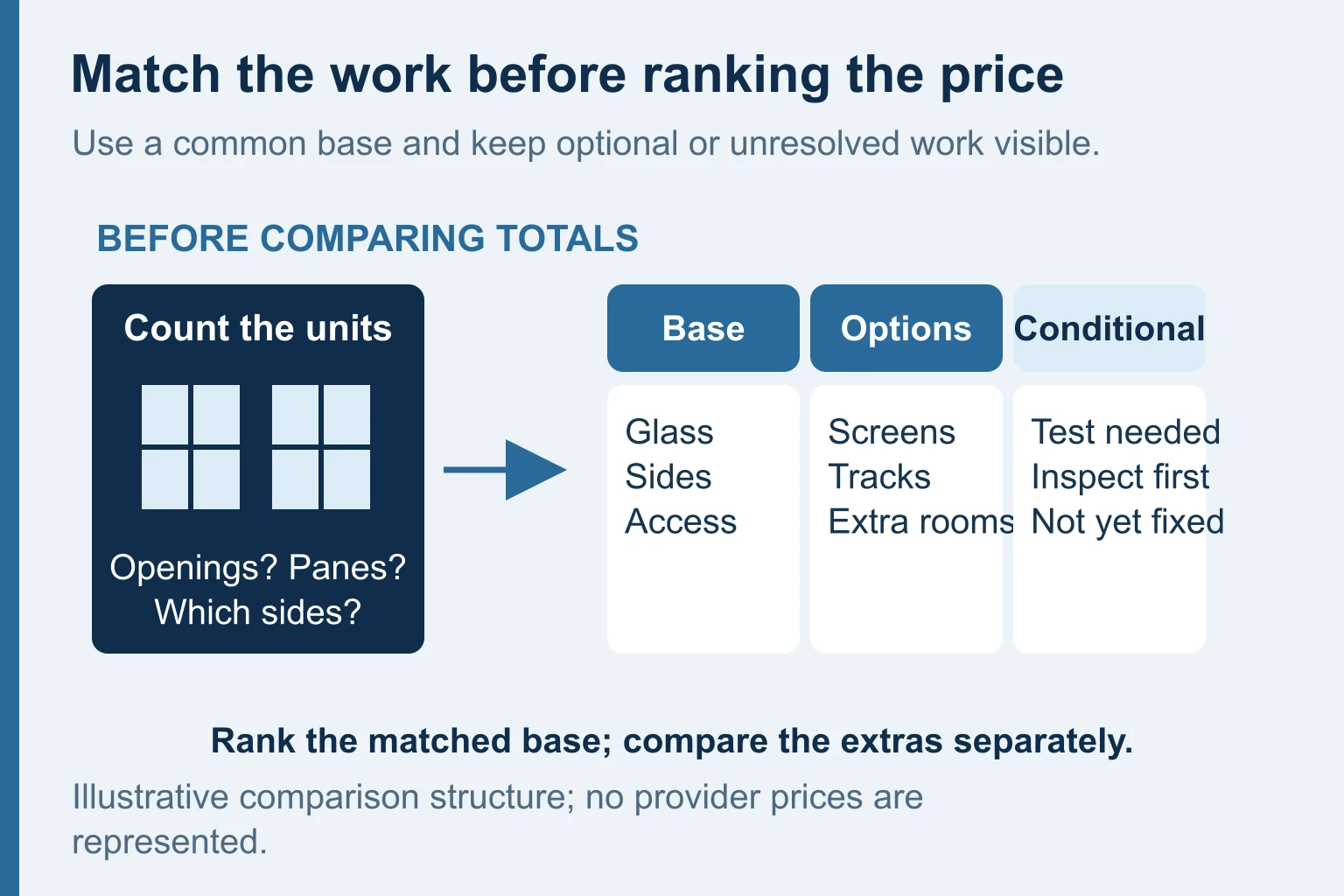
First reconcile what one window means
One provider may count openings while another prices individual panes. A picture window, a French door and a skylight can all be called a window in conversation while representing different work. Send facade photos and identify divided sections, doors and high glass. Ask each company to explain its counting unit. A per-window calculation is only useful after you know the denominator.
Next, specify the sides. Exterior-only and both-sides quotes are different purchases even when the pane count matches. Texas Window Washing’s residential page reviewed October 30, 2026 listed selectable interior and exterior washing, screens, tracks, French panes and specialty work. Other providers may package those differently; the comparison must expose those differences.
Use three price columns
- Base: the same named glass and sides in every proposal.
- Options: requested screens, tracks, interior additions or other separable tasks.
- Conditional: work still dependent on inspection or a treatment test.
Beside each row, mark included, excluded or unclear. Do not estimate the price of a missing item yourself. Ask the bidder to clarify it or leave the quote unranked for the scope you need. An advertised starting price belongs outside the completed comparison until the provider confirms what it covers at your property.
A worked comparison without invented market prices
Imagine two offers for a two-story home. Offer A includes exterior glass and leaves screens in place. Offer B covers both sides, screen washing and selected tracks. Instead of deciding that A is cheaper for the same job, ask each company for your chosen common base. Then request the extras you would actually purchase. The result may favor either offer, but you will know which work creates the difference.
Now suppose both quotes exclude a few sprinkler-marked panes pending inspection. Keep their assessment outside the fixed base comparison until the conditions are clear. An allowance, a test charge and a fixed restoration price are not interchangeable. Ask what each amount buys and what decision remains. The NGA/IWCA guidance supports identifying glass and coatings and testing uncertain conditions before choosing a treatment.
Compare the whole purchase, not just the bold total
Check whether travel, a minimum charge, applicable tax or an initial visit condition changes the amount payable. Ask the provider rather than assuming any of those charges exist. Note payment timing and how a change is priced. A quote can be attractive while still requiring clarification on a cost that affects your decision.
For recurring service, show the number of visits and the surfaces covered at each one. Keep an initial detail clean separate when it differs from maintenance. Do not multiply a repeat-visit figure by a guessed annual schedule. Use the proposed term and the work you expect to use, including what happens if a visit is moved or the arrangement ends.
When can you honestly rank the quotes?
Rank them after the base rows match and the remaining options are visible. You can choose a narrower scope to meet a budget, but label that choice accurately. Paying less for exterior glass alone can be sensible; it simply does not prove that the company is less expensive for a both-sides-and-screens job.
Keep the final revision and its date with the worksheet. This page does not supply a market average or provider price table because no comparable local quote sample has been collected. Your completed worksheet produces something more relevant: a price order for a defined property and purchase, with the assumptions still visible if the job changes.
Sources and further reading
Put the worksheet to use
Describe the matched glass scope and the options you want priced separately when requesting an estimate.
Request an itemized estimate