
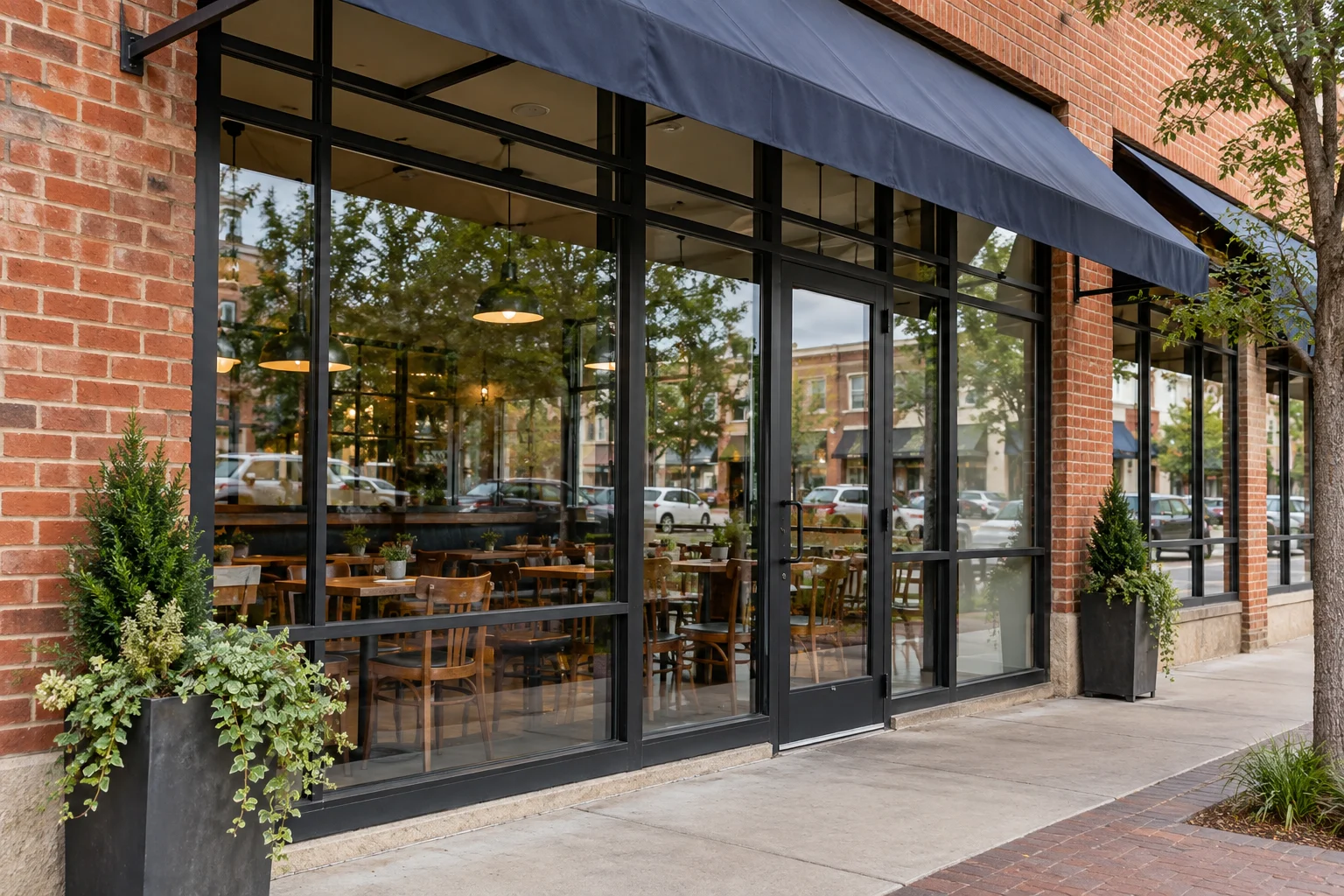
Architectural illustration of a brick storefront with a navy awning, display windows, and glass entrance

For your business

Commercial window cleaning in San Antonio

Clear storefront glass and a workable schedule matter to a business. Tell us what kind of property you manage, which glass needs attention, and when access is available.

Architectural illustration

Glass that works for your business

From the front door to the tenant schedule.

A shop entrance gets touched all day. Office lobby glass may need interior access and a named contact. A retail center can involve several tenants, different opening times, and a shared sidewalk. A useful commercial estimate reflects those differences rather than treating the property as one large window.

Start with the customer-facing glass and the hours when the team can reach it. Then separate exterior windows, interior partitions, doors, and any construction cleanup. That makes it easier to compare proposals, coordinate access, and decide which work belongs on a recurring schedule.

01

Storefronts

Entry doors, display glass, and customer access.

02

Offices & managed properties

Lobby glass, partitions, and tenant coordination.

03

Recurring visits

A defined scope and an agreed access window.

Choose your scope

Plan your cleaning.

Pick what needs attention. We’ll turn your choices into a clear starting point for your quote.

Start with your property.

Tell us which glass, screens, tracks, or panels you want cleaned.

Request a custom quote

Choose the scope

What can be included

Each line is discussed and priced for the property; the written estimate defines what is included.

Storefronts and restaurants

Entry glass, display windows, and visible exterior panes.

Offices and retail centers

Interior partitions, lobby glass, tenant fronts, and coordinated access.

Schools, warehouses, and larger sites

Define building zones, hours, height, and equipment reach before quoting.

Construction handoff

Identify coatings and stuck residue before choosing a cleaning method.

Scheduled maintenance

Ask about monthly, quarterly, or property-specific recurring visits.

What does your property need?

Match the visit to the way the property runs.

Illustrative scopes for three common commercial situations. Equipment reach, timing, and availability are confirmed for the actual site.

01

A street-level shop or restaurant

Separate the frequently handled entry doors from the larger display panes. Identify tables, signs, or merchandise close to the glass, and say when the sidewalk is busiest. A recurring plan can focus on the public-facing areas while other glass is quoted on a different schedule.
02

An office or multi-tenant center

Provide a simple list of buildings, suites, or glass zones. Name the person who can arrange interior access and tell us which tenants must be notified. Clarify whether a common-area quote includes individual suite windows; that distinction prevents a larger assumed scope than the property manager intended.

03

A renovation or construction handoff

Share the handoff date, the glass specifications you have, and photographs of paint, adhesive, mortar, or other residue. Post-construction cleanup needs its own assessment. It should not be folded into a maintenance wash without discussing coatings, residue, and any pre-existing damage.

Estimate inputs

What helps us quote accurately

A few property details let the team identify scope and access before setting a visit plan.

  • Property type and number of buildings
  • Glass area and interior/exterior scope
  • Hours and tenant access
  • Height, obstructions, and safe equipment reach
  • Recurring frequency and separately quoted detail work

A closer look

Fresh construction. Careful cleaning.

For post-construction glass, coatings and stuck residue change the safe cleaning approach. Industry guidance recommends identifying the glass and coating before using aggressive methods.

Source: National Glass Association / IWCA cleaning guidance.

Glass
comes first.

Identify the coating and residue before choosing the method.

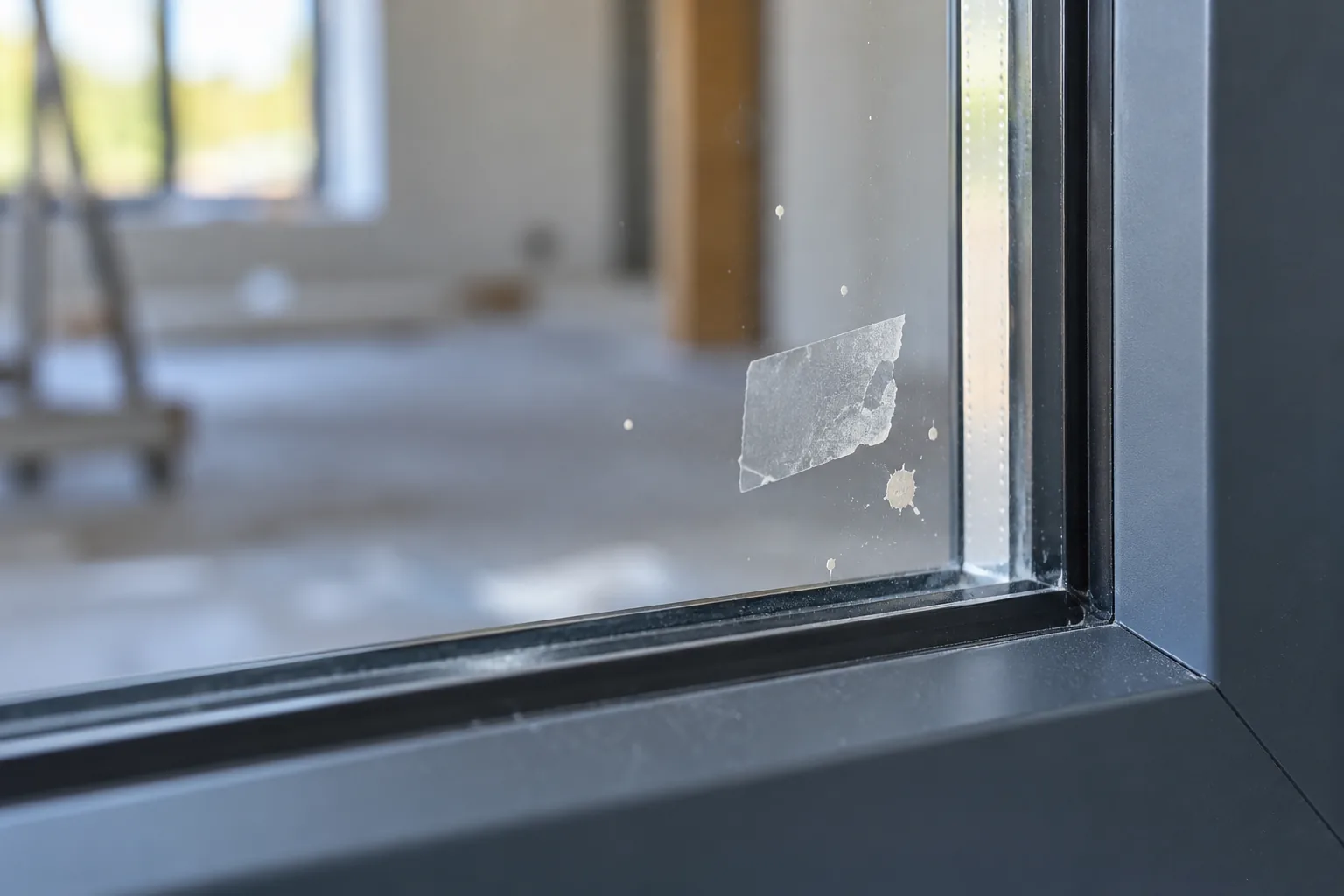
Illustration of an adhesive remnant and small paint specks near the corner of a new glass pane
Illustrative bonded residue. Identify the material and glass specification before considering a removal method.

From the first question to the next visit

Make recurring service easy to manage.

Define the baseline

Keep an agreed list of elevations, doors, interior panes, and exclusions. State whether screens, partitions, and specialty work are part of every visit or separate requests. A repeatable scope makes invoices and future visits easier to compare.

Choose the access window

Share opening hours, delivery periods, alarm or gate arrangements, and a site contact. Tell us if you need work outside customer hours or if a tenant must be present. The estimate should confirm the workable schedule before a visit is promised.

Review the cadence

Judge frequency by the actual glass: touched entrances, sheltered panes, dust exposure, and the standard you want customers to see. Ask about monthly or quarterly service, then revisit the interval if conditions change. Different zones do not necessarily need the same frequency.

Common questions

Before you request an estimate

Can work happen outside customer hours?

Share your preferred access window. Scheduling around business hours is offered when possible and is confirmed with the estimate.

What if our building has high glass?

Describe or photograph the height and access. The team can quote work within its equipment capabilities and identify any limitation before scheduling.

Do you offer recurring storefront service?

Monthly storefront and quarterly commercial maintenance options are available. The visit plan is tailored to the property.

Keep exploring

Guides for the next decision

Build the visit around your business.

Identify the customer-facing glass, occupied rooms, and workable visit window.