
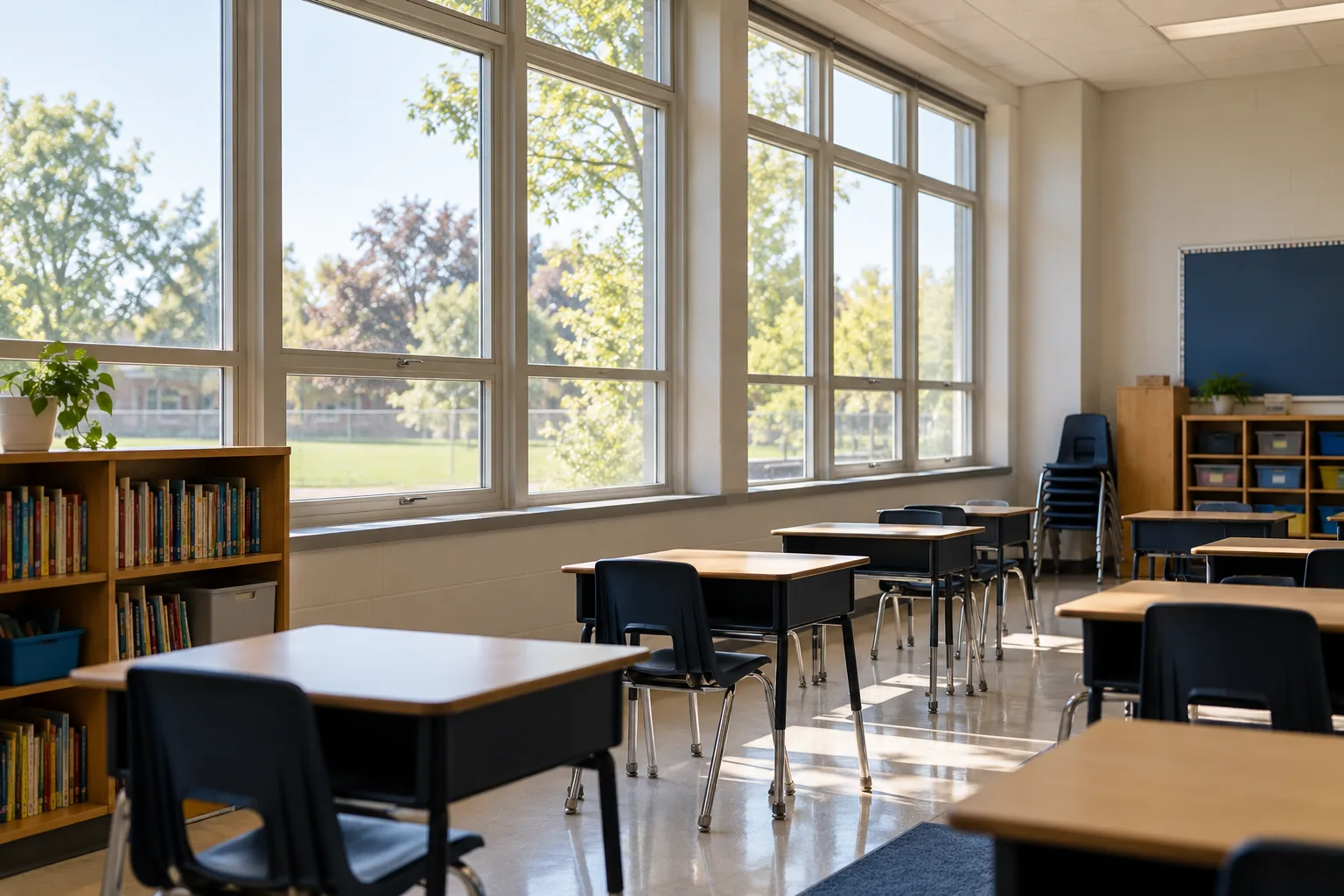
Choose the campus period before promising a date
Term time, examination periods, holidays, and summer activities create different opportunities. A school building can still be occupied during a break, and an empty classroom may be in use for maintenance or another contractor. Ask facilities staff what is actually happening in each proposed area. Use the campus calendar to choose a workable period rather than assuming the whole site is vacant because lessons are paused.
Split exterior and interior work where necessary. Entry glazing might be arranged around drop-off and pickup, while classroom interiors may belong in a separate vacancy period. The plan should identify buildings and room groups the school can release together. A single arrival time for the whole campus is less useful if several spaces cannot be entered until later.
Make room custody explicit
Name the school representative who can admit the crew, release rooms, and arrange lock-up. An open door does not establish permission to enter a classroom or office. If the route changes, the crew should have one facilities contact to consult rather than seeking instructions from staff who may not manage the work.
Decide how a room moves back into school use. Facilities staff may want to check the space before locking it or handing it to another contractor. Use building and room identifiers in the work brief, and avoid including student or staff information that is unnecessary for the cleaning. The brief needs operational directions, not classroom schedules containing personal details.
For classroom interiors, ask school staff to arrange any necessary clearance of ledges, displays, or equipment. The cleaning contractor should receive a prepared room description rather than instructions to decide which classroom materials may be moved. If a room is not ready, the facilities contact can redirect the route or defer it. At handback, identify the room by number and confirm who resumes custody; that is more practical than leaving a general message that the classroom wing has been visited.
Review products through the school’s process
The U.S. EPA advises schools to manage cleaning chemicals carefully and keep them inaccessible to children. Ask facilities staff who reviews proposed products and what storage or handling arrangements apply on this campus. An unfamiliar residue treatment deserves review before it is brought into a planned routine visit.
For the glass, gather available information about films, coatings, and recent replacement work. NGA/IWCA guidance calls for appropriate methods and attention to manufacturer instructions. Do not treat a newly renovated classroom as ordinary maintenance without disclosing adhesive, paint, or other construction residue. Any school-specific procurement, screening, or site-entry requirements also belong in the bid package before award.
Keep cleaning equipment away from changing movement patterns
Show the bidder drop-off areas, pedestrian entrances, accessible routes, courtyards, and spaces used by after-school groups. The quiet entrance in the morning may become busy later. Ask where hoses, poles, and other equipment will be placed and how that fits the school’s approved arrangements.
High windows need their own method discussion; a general commercial service description does not confirm reach on a particular building. OSHA publishes equipment-specific fall-protection requirements. The school supplies the site constraints while the contractor identifies its proposed approach. Unconfirmed upper glass should remain an open bid question rather than a surprise when the crew reaches the building.
Example: a holiday programme keeps one wing occupied
In a hypothetical break-period plan, one wing hosts activities while another can be released by facilities. Clean the released rooms under the agreed route and retain the occupied wing for its own workable period. Do not describe the entire campus as completed when only the available wing was arranged.
- Before work: confirm building groups, facilities contacts, and current activities.
- During work: use the named contact to resolve a changed room or entrance.
- At handback: identify rooms completed, rooms still unavailable, and who can arrange the next release.
After the first visit, update the brief with any scheduling conflict the facilities team found. Keep that practical lesson for the next term or break so a different crew or campus contact can follow the arrangement.
Sources and further reading
Share the campus vacancy plan
Identify the buildings available for work, the facilities contact, and any school requirements relevant to the proposed visit.
Describe the campus visit