
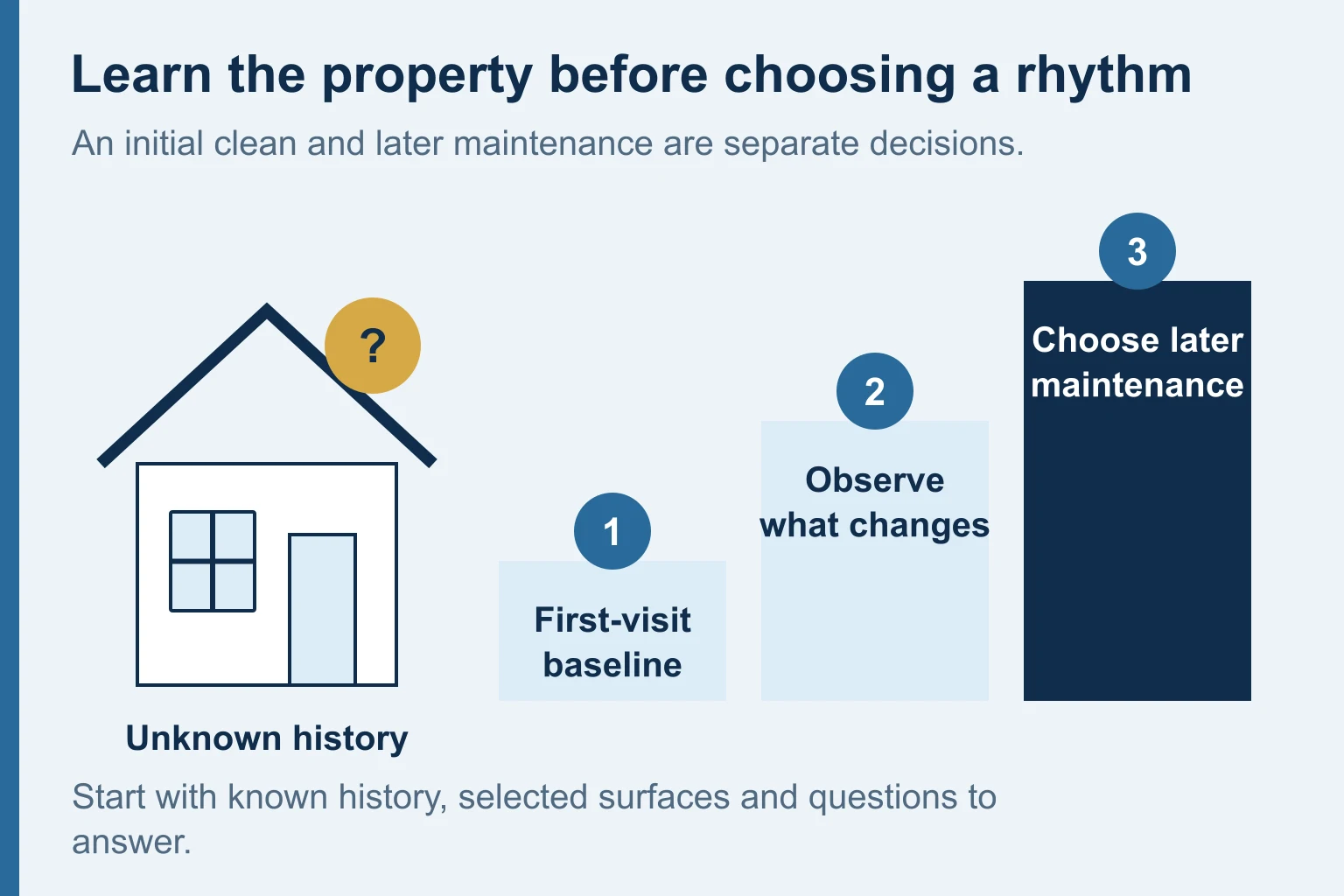
Start with the history you actually have
Gather any available window, film or screen paperwork from the owner, installer or property records. Note recent renovation and existing marks, but do not guess what caused an unfamiliar condition. A new-to-you property can have different glass products or repairs across the same facade. Tell bidders where the history is uncertain so their first proposal can distinguish washing from further assessment.
New Braunfels Utilities explains that water hardness varies with source, location and season. That makes water context worth sharing if you can confirm the property’s supply. It does not make every white mark a removable mineral deposit. Describe where irrigation reaches the glass and which panes look different rather than importing a hardness number from another city.
Choose a first-visit baseline you will recognize
Decide what you want to understand after the visit. A homeowner might want both sides in main living spaces plus a review of screen condition. A new shop operator might need entrance and display glass ready before opening. Name those surfaces rather than asking the cleaner to repeat an unknown previous service. A focused initial scope can be complete for its purpose even when it does not cover every pane.
- Glass: rooms or elevations, door glass and the selected sides.
- Screens: locations, type and any visibly damaged frame or mesh.
- Uncertain conditions: film, renovation residue or persistent marks to assess.
- First-visit outcome: what should be clean and what questions should be answered.
Compare the response to an unknown-history window
For example, suppose a patio door is cloudy while adjacent panes mainly show fingerprints. Ask each bidder whether the door belongs in routine washing, needs inspection first or should be referred for another assessment. The response should explain the next step and its limits. A broad promise to restore every window does not help you learn which condition you are buying treatment for.
The NGA/IWCA guidance recommends identifying glass and coatings and following the relevant manufacturer instructions. Share any instructions you obtain before treatment. If a proposed method remains conditional, keep the routine work and the uncertain pane distinct. That lets you establish a clean baseline without approving an unspecified restoration project.
Verify local availability before building your plans around it
Texas Window Washing’s homepage reviewed October 30, 2026 named New Braunfels among surrounding communities, and its residential and commercial pages described the glass services it marketed. Confirm the exact address, requested work and available date with it or any other provider. A city in a service list does not reserve a visit or establish travel terms.
For a move-in home, explain when the rooms will be accessible and whether furniture or other work will affect them. For a business opening, identify the date when displays, signage and fit-out activity will be finished near the windows. These details belong to the first-visit plan because cleaning too early may not leave the baseline you expected.
Choose maintenance after seeing the baseline
Do not assume the first clean and every repeat visit should contain identical work. Once the approved glass is clean, observe which doors are handled frequently, which exterior panes soil first and whether screens need the same attention. Ask for a later maintenance option against those observations. Keep the initial condition questions out of a recurring price until they have been resolved.
Compare providers by how clearly they separate the starting condition, the initial work and the future choice. A useful first visit leaves you with a more informed property: known glass concerns, understood inclusions and a realistic basis for deciding whether to book again. That is a better fit test than choosing a citywide winner from an unsupported list.
Sources and further reading
Choose the first-visit baseline
Explore the residential menu to identify the glass, screens and detail work you want assessed at a new-to-you home.
Set your starting scope