
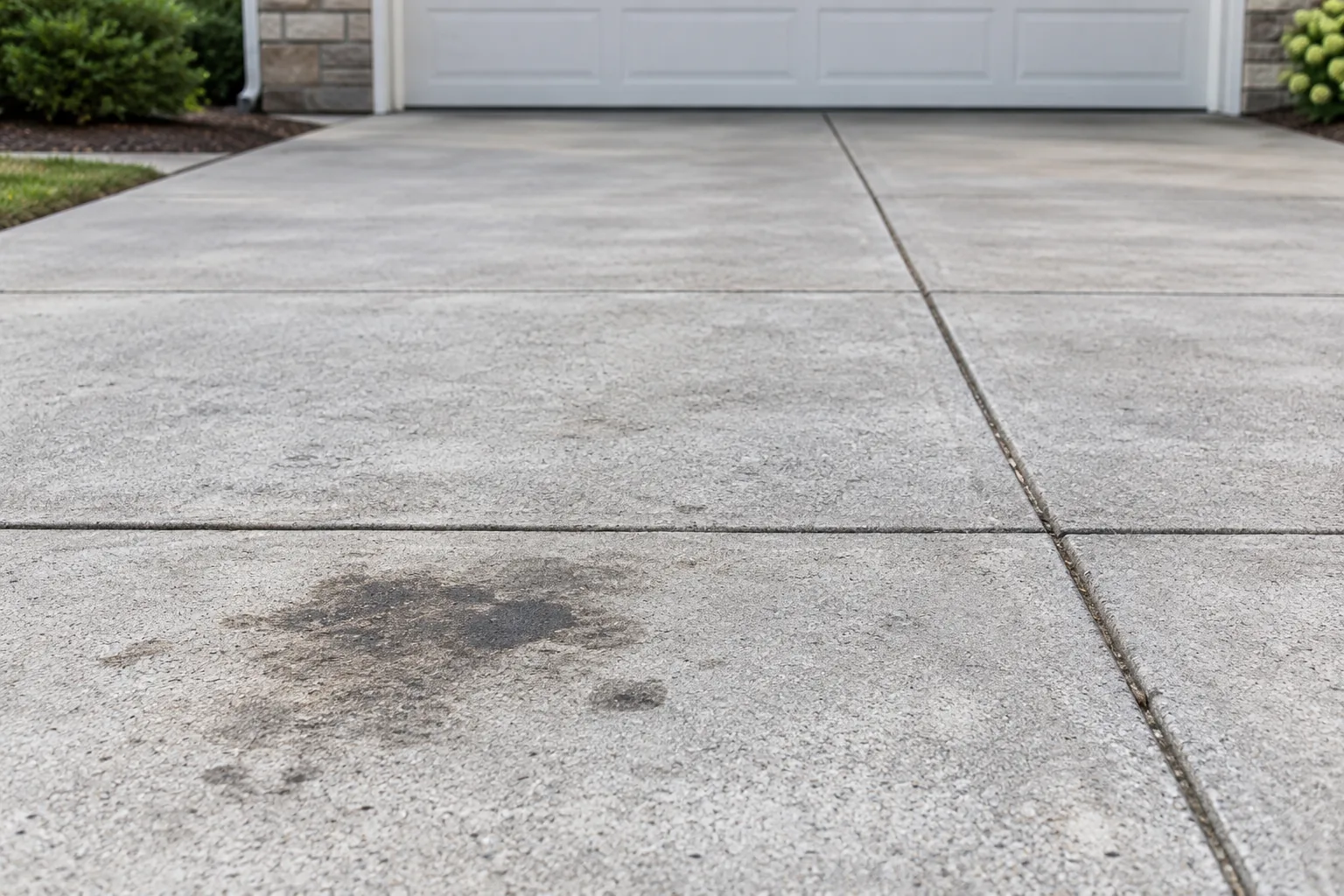
Read the surface before choosing equipment
Note whether the drive is plain concrete, decorative concrete, stone, pavers, painted material or a sealed surface. Photograph existing chips, loose joints and discolored patches. If a sealant or finish was installed, check the product’s cleaning directions. A method that seems harmless on plain concrete may remove a coating or wash sand from paver joints. A small test area that is allowed to dry gives a better comparison than a fresh wet stripe.
Separate loose debris from attached stains
Dry sweeping first reduces the amount of mud and leaf material carried into runoff. The City of San Antonio explicitly recommends sweeping and collecting solid debris before surface washing. For oil or fluid spots, its business guidance calls for absorbent materials and proper disposal before washing. Pressure water alone can spread a contaminant rather than remove it. A contractor should explain which marks are expected to improve and which may remain after one visit.
Plan where the water goes
In San Antonio, the drain at the curb is part of the stormwater system, not a place to send dirty washwater by default. The city’s guidance for commercial pavement washing says soapy wastewater must be kept out of storm drains and may need capture and proper disposal. Water-only work has a different routing discussion, but the job still needs a site plan. Ask where runoff will travel, what happens at the street inlet, and how landscaping or soil areas will be protected.
Keep glass, doors and people out of the spray path
- Move vehicles, mats and loose items before work and identify door thresholds or garage weather seals that might admit water.
- Ask how the operator will protect adjacent windows, painted trim, wood, exterior outlets and plants from overspray.
- Keep people and pets away from the spray area. High-pressure equipment can injure skin; it is not an appropriate tool for cleaning a person or an animal.
- If wall washing or window cleaning is also planned, agree on the order of work so the driveway rinse does not soil freshly cleaned glass.
A mixed driveway needs more than one surface description
A concrete parking area, a paver border and a coated garage apron should not disappear into the phrase “one driveway.” Mark the transition points and ask how each material will be treated. The instructions for any installed sealer or decorative finish matter at that boundary. If the finish is unknown, an inconspicuous dry-reviewed test is more useful than selecting equipment by its advertised maximum pressure. The same caution applies to an old repair that already differs in texture or color. Washing can reveal that difference; a brighter surrounding surface does not make the repair a cleaning defect.
When to call another specialist
If the drive has widespread cracking, standing water, failing sealant or suspected material damage, cleaning is not a repair. Get the underlying surface assessed first. If you are seeking window cleaning as part of a broader exterior refresh, ask for that separately; the current Texas Window Washing site lists glass and related services, not driveway pressure washing.
Use the dry result as the acceptance check
A wet driveway can look even-toned while faint oil shadows, striping or removed sealer only become visible after it dries. Agree in advance on a realistic result for each stain type and take a few before photos from the same angle. After drying, compare the test area and the rest of the drive in similar light. If the provider promised stain treatment, ask what was applied and whether a follow-up is safe for that surface. This keeps the final conversation tied to the agreed scope rather than a broad promise that every old mark will vanish.
Choose the next action from what the mark is doing
- Loose leaves and grit: collect them before water turns them into runoff. The first task is debris removal, not stronger spray.
- A known vehicle-fluid spot: tell the operator what spilled and whether absorbent cleanup has already occurred. Washing should not simply move the contaminant toward the street.
- An unknown old shadow: ask what a test can establish. Do not assume it will vanish because a different patch of concrete brightens.
- A peeling coating or visibly loose paver joint: assess the surface condition and applicable care instructions before proceeding across it.
Judge the whole dry surface in consistent light
For a useful comparison, stand where you took the original photograph and look at the treated area after it dries. A wet pass can appear darker and more uniform than the final surface. Compare the stain itself, the surrounding material and the transitions between treated areas. If a shadow remains, ask whether it is residual contamination, a finish difference or a condition the cleaner cannot identify. Repeating the same treatment without an explanation is not a plan. For a separate sealing project, let the finish installer decide what preparation and readiness it needs rather than treating a completed wash as automatic approval to coat.
Sources and further reading
Turn the surface plan into a contractor comparison
Compare offers for the material and stains you have identified, including runoff and dry-result limits.
Read the pressure washing hiring guide