
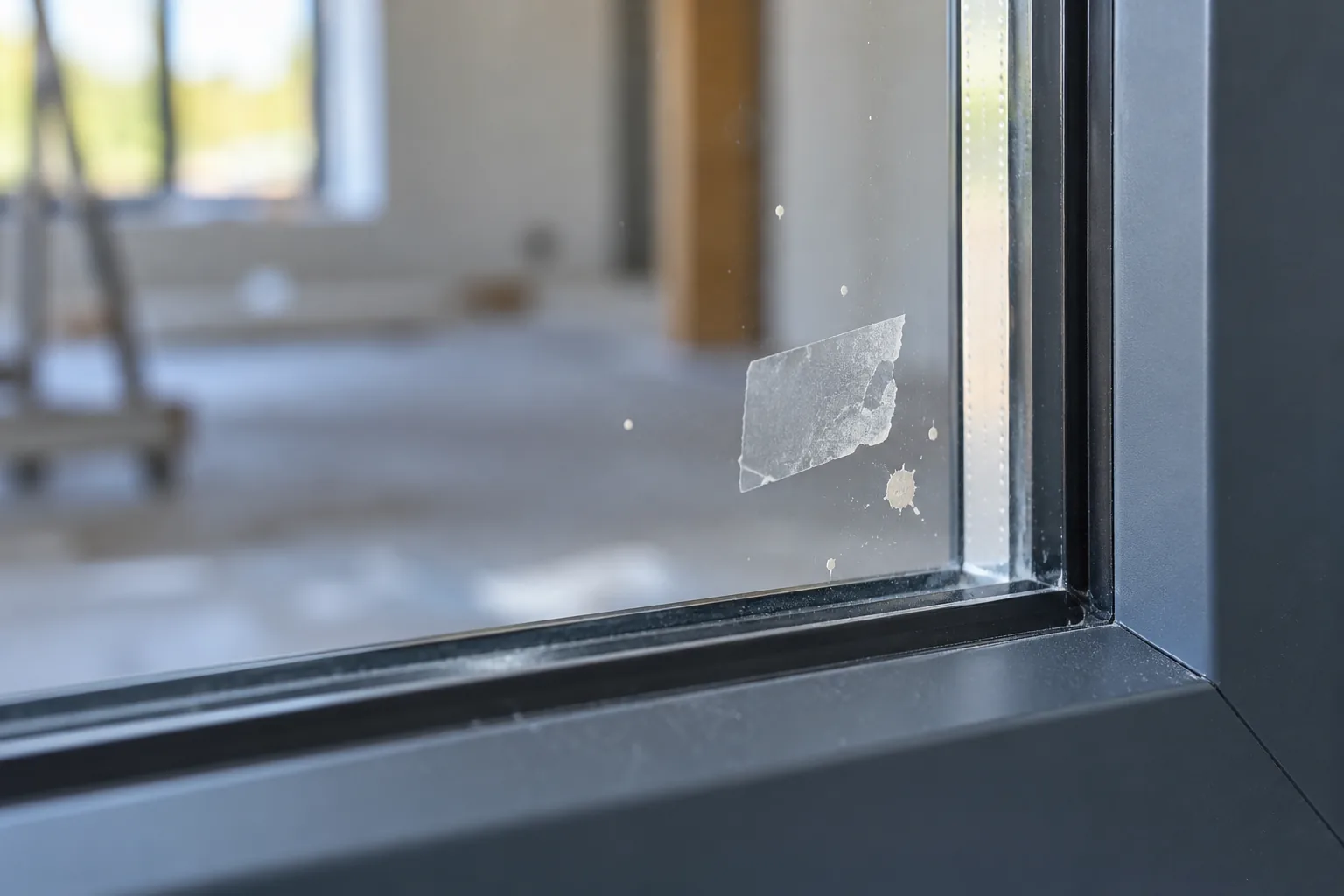
Replace dirty window with a useful observation
A punch-list item needs a location and a description someone else can find. Identify the building, elevation, floor, and pane; then describe the visible condition. Ordinary dust, a paint-like deposit, adhesive, and a line that may be a scratch lead to different questions. Do not decide the cause from a distant photograph or group every mark under cleaning incomplete.
Photograph a wide view for location and a close view for the concern. Include the observation date and any product information available from the glazing team. If the glass has already been cleaned, say what work was performed. That helps a bidder understand whether it is evaluating an untouched construction surface or a condition that remained after routine washing.
Separate the vendors by the work still required
Whole-building final cleaning, debris removal, window washing, and glass restoration are different assignments. A company offering one does not automatically cover the others. Ask each candidate which listed items it can assess and which require the glazing supplier or another specialist. A precise answer about a limited task is more useful than a broad promise to finish the entire site.
Texas Window Washing publicly describes post-construction glass cleaning within its commercial offering. That supports requesting a project-specific glass proposal; it does not establish a ranking or imply whole-building final-clean services. Give it and other candidates the same observations so their responses can be compared against the remaining work.
Ask what a test area will establish
NGA/IWCA guidance recommends appropriate procedures, attention to manufacturer instructions, and a small test clean where needed. Ask which surface will be tested, which observed material the method is intended to address, and what the result will help decide. A test that removes ordinary dust does not demonstrate that a different bonded residue can be treated the same way.
If the result leaves uncertainty about the glass, involve the appropriate project contact before extending the method. Keep a suspected defect open for review rather than asking the cleaner to guarantee a like-new finish. The observation, method tried, and remaining question should be clear enough for the glazing team to understand without repeating the whole site walk.
Use the punch-list photograph to frame a question, not a required tool choice. A project contact can describe visible adhesive and supply its known product information without directing the cleaner to scrape it. Ask the candidate for its proposed approach after reviewing the actual glass and material. If different conditions occur on the same elevation, identify them individually. One representative clean area should not be used as evidence that every other pane has the same residue or the same surface.
Example: three panes, three different next steps
Consider a hypothetical punch list containing a dusty entry pane, a pane with unknown adhesive, and a pane with a visible line after washing. The entry may fit the routine wash. The adhesive may need product information and a proposed treatment. The line may need examination by the appropriate glazing contact before anyone describes it as removable soil.
Price or authorize those tasks distinctly. A quote covering the first pane should not be rejected because it does not promise to repair the third, and a general final-clean total should not hide the assessment needed for the second. This is how the punch list becomes a set of decisions instead of a dispute over one word: clean.
Match the finished work to the remaining items
- Closed cleaning item: the identified pane received the approved work.
- Further treatment proposed: the contractor has described an additional method for consideration.
- Glazing review required: the remaining condition needs the relevant project specialist.
- Area unavailable: the site must release the location before the planned work can happen.
Confirm that access and nearby construction activity fit the proposed visit. OSHA provides equipment-specific fall-protection requirements for elevated work; the bidder should explain its approach and any reach limits. At completion, reconcile the glass items with the overall project punch list so an open defect does not disappear behind a completed cleaning invoice.
Sources and further reading
Bring the remaining glass items
Review the commercial glass offering and ask about the identified panes, residue, and construction stage.
Discuss post-construction glass